May 28, 2026
Your Trial Preparation Outline: How to Organize for Court
- A trial preparation outline keeps case details organized.
- Start with case theory, then build into evidence and witnesses.
- Each document, witness, and argument should support the case theme.
- Track exhibits, motions, filings, technology, and logistics early.
- Post-trial review can help preserve issues and improve strategy.
A trial preparation outline gives structure to one of the most demanding stages of litigation. As the court date approaches, attorneys and clients need more than a general sense of the case. They need a working plan that organizes legal arguments, witnesses, exhibits, filings, courtroom logistics, and post-trial considerations into a clear sequence.
Without an outline, important details can become scattered across emails, pleadings, notes, discovery files, and conversations. That can make it harder to prepare witnesses, connect evidence to legal elements, respond to opposing arguments, or present the case clearly in court. A strong trial preparation outline helps the legal team stay focused, reduce avoidable mistakes, and approach the trial with a better understanding of what must be proven, who will testify, and how the evidence will support the overall strategy.
How should I organize my trial preparation outline?

A useful trial preparation outline should move from strategy to execution. Start with the case theory, then build outward into legal elements, evidence, witnesses, motions, logistics, and follow-up. This keeps the outline practical instead of turning it into a loose collection of notes.
The goal is not to create paperwork for its own sake. The goal is to make sure every piece of the case has a purpose. Each document should connect to a witness. Each witness should support a fact or legal element. Each legal argument should fit into the larger case theme. When the outline is organized this way, the trial team can see the full picture before stepping into court.
Strategic case development
The first step is defining the case theory. This should explain the “who, what, and why” of the case in a clear, concise way. From there, the attorney can identify the legal elements required to prove each claim or defense. The outline should connect those elements to supporting evidence, documents, and testimony.
An evidence binder or trial notebook can also help organize key documents, deposition excerpts, pleadings, and evidentiary checklists so important materials are easy to find when needed.
Witness preparation
Key fact witnesses and expert witnesses should be identified early. Each witness should have a defined purpose, including what their testimony is expected to prove and which exhibits may be introduced through them.
When needed, subpoenas may be served to secure attendance. Attorneys can also review testimony, deposition history, exhibits, and likely areas of direct or cross-examination with each witness. Witnesses should understand courtroom demeanor, including how to answer clearly, listen carefully, and avoid guessing.
Exhibits & evidence organization
A master exhibit index should list each exhibit, its purpose, the witness tied to it, and any authentication or admissibility concerns.
Copies should be prepared for the court, opposing counsel, witnesses, and the trial team. For video or digital evidence, playback, audio, formatting, and equipment should be tested in advance. Backup copies should also be available in case technical issues arise.
Pre-trial motions & filings
All filing deadlines should be tracked for motions, proposed jury instructions, pre-trial orders, witness lists, and exhibit lists.
Motions in limine may be used to exclude prejudicial, irrelevant, or improper evidence. Jury instructions should reflect the legal standards that apply to the case. Pre-trial orders should follow court requirements for stipulated facts, disputed issues, witnesses, and exhibits.
Trial logistics & finalization
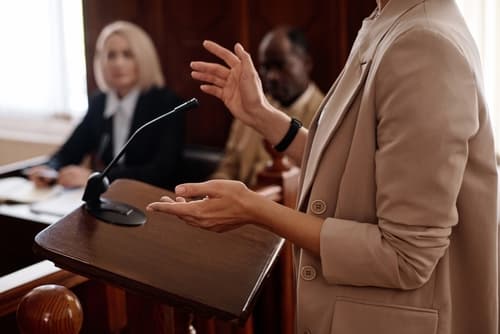
When possible, the trial team may visit the courtroom to review the layout, technology, exhibit display options, and local procedures.
Opening and closing outlines should be drafted early, but they should remain flexible in case testimony, rulings, or objections shift the direction of the case. Before the court date, a final review should confirm witness availability, exhibit readiness, technology backups, staffing roles, and communication plans.
Post-trial preparation
After the trial, the attorney may review testimony and transcripts for future motions, enforcement issues, or appeal. Important objections should be preserved, and any follow-up issues should be noted.
If allowed, juror interviews may provide useful feedback. A final team debrief can also help identify what worked, what needs improvement, and how future trial preparation can be stronger.
Who can help me create a strong trial preparation outline?
If you’re looking to fortify your legal strategy and prepare for a trial, Blackledge Investigations is the top-rated team of streetwise professionals who specialize in making the process feel more organized, focused, and manageable. Whether you’re located in the Connecticut panhandle area or anywhere else in the state, we’re here to help you understand what needs to be reviewed, organized, and addressed before your court date.
From a step-by-step guide on the trial process and preparation for direct and cross-examination to practical pre-trial preparation checklists and post-trial considerations, we work with clients who want a more dependable plan that covers all eventualities before they step into court.
Contact Blackledge Investigations to learn how we can help you build a trial preparation outline that supports your case, your legal team, and your next steps with clarity. Call us today!
Related Articles
August 31, 2026
How Criminal Defense Investigators Reconstruct a Case Timeline
A criminal case can involve dozens of events spread across minutes, hours, or even days. Police reports, witness statements, phone records, photographs, video, and other materials may each describe only one part of what happened. Reconstructing a case timeline means bringing those pieces together to determine when key events occurred, how they relate to one …
August 31, 2026
Why Reviewing the Police Investigation Matters in a Criminal Defense Case
Police reports often provide the defense with its first detailed account of an alleged offense, but they do not always answer every question that matters to the case. Reports reflect what officers observed, what witnesses told them, what evidence they collected, and which investigative steps they took at the time. Our criminal defense investigator in …
July 31, 2026
Why Early Mitigation Work Can Change the Direction of a Case
Early mitigation work can influence a criminal case long before anyone begins preparing for sentencing. When our mitigation investigators in CT become involved from the start, we have time to examine the client’s background, locate records, interview collateral witnesses, and identify circumstances that may affect defense decisions. This process can reveal trauma, developmental concerns, treatment …